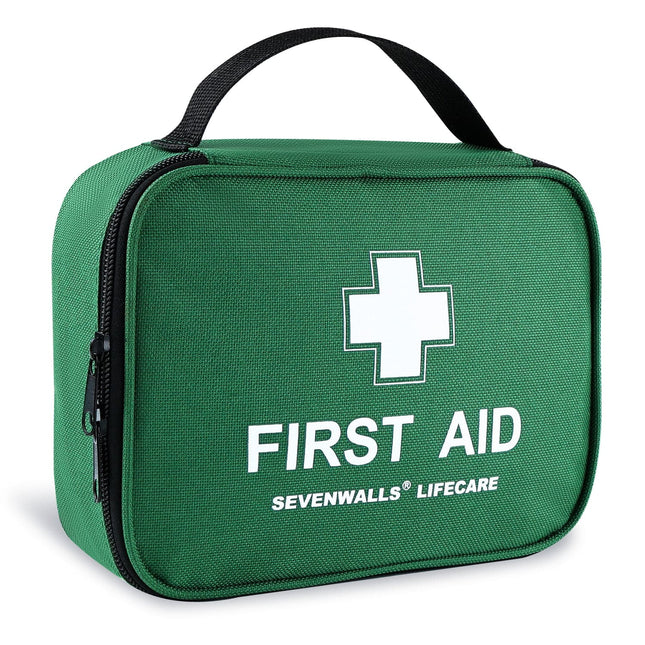
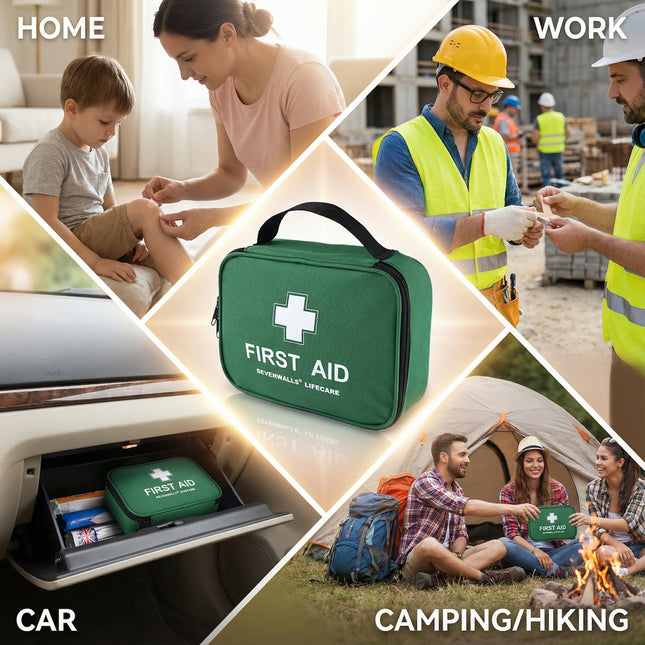
First aid requirements in the UK are not the same in every setting. What is suitable for a low-risk office may be inadequate for a construction site, a school trip or a public-facing venue.
This guide explains how first aid requirements vary by environment in the UK. It brings together legal principles, HSE guidance and practical considerations to help employers, organisers and responsible persons understand what level of provision is appropriate in different situations.
This is a reference guide designed to support planning, risk assessments and compliance decisions.
How first aid requirements are determined in the UK
UK first aid law is risk-based. There is no single checklist or universal kit that applies to every environment.
Instead, organisations must assess:
The nature of the activities being carried out
The level of risk present
Who may be affected, including employees, visitors or the public
The size and layout of the premises or environment
This approach applies across all environments, whether fixed workplaces, temporary locations or mobile settings. If you need a detailed explanation of the legal framework, see UK First Aid Law Explained.
Low-risk environments
Low-risk environments are places where activities are unlikely to cause serious injury. Examples include:
Offices and administrative workplaces
Small retail units
Professional services
In these environments, first aid provision usually focuses on:
Treating minor cuts, grazes and burns
Managing minor illness or discomfort
Providing basic first aid until help arrives if needed
Some environments involve regular contact with members of the public, customers or visitors. These include:
Retail premises
Leisure and sports facilities
Community venues and events
First aid provision should consider not only staff, but also non-employees who may be injured or taken ill on the premises. Clear access, visible signage and appropriate coverage are important in these settings.
Temporary and mobile environments
Not all environments are fixed workplaces. Temporary or mobile settings include:
School trips and outings
Events and community activities
Vehicles used for work
In these cases, first aid provision must be portable and suitable for the duration and nature of the activity. Planning should consider distance from emergency services and the ability to summon help.
Serious injury risk, trained first aiders, multiple kits
Events / mobile work
Variable
Portable provision, access to emergency help
Why risk assessment links environments together
Although environments differ, the underlying process is the same. A risk assessment determines:
What injuries are likely
Who may be affected
What first aid provision is reasonable
This is why the same legal principles apply across offices, sites, vehicles and temporary locations. For a step-by-step explanation, see Workplace First Aid Risk Assessment (UK).
Common misunderstandings about environment-based first aid
There is no single “approved” kit for all environments
Low-risk does not mean no first aid provision
Public-facing environments may require additional planning
Temporary settings still require suitable first aid arrangements
Understanding these differences helps organisations plan proportionate and compliant first aid provision.
First Aid Requirements by Environment — FAQ
Do all environments need the same first aid kit?
No. First aid provision should be matched to the risks present in each environment.
Are offices exempt from first aid requirements?
No. Offices are usually low risk, but suitable first aid arrangements are still required.
Do public venues need extra first aid provision?
Public-facing environments should consider visitors and customers as part of their planning.
How are temporary environments assessed?
Temporary settings should be assessed based on activity type, duration and access to emergency help.
Is risk assessment always required?
Yes. Risk assessment underpins all first aid decisions in the UK.
1-2 days delivery
FirstAidKitsUK offers free delivery on all UK orders via Royal Mail 48 Tracked. We offer free next-day delivery on all orders over £30 via Royal Mail 24 Tracked.
Royal Mail 48 Tracked: Orders placed before 16:00 pm are dispatched the same day Mon-Fri, and 11:00 pm Sat. Orders after this threshold will be dispatched the next working day. Delivery takes 2 days, including Saturdays. This service is free for all orders.
Royal Mail 24 Tracked: Orders placed before 16:00 pm Mon-Fri, before 11pm Saturday are dispatched the same day. Orders after this threshold will be dispatched the next working day. Delivery will take place the next working day. This service is free for orders over £30. The charge for this service is £3.99 for orders under £30.
This may not be available during public holidays or weekends in between public holidays.
1-2 days delivery
FirstAidKitsUK offers free delivery on all UK orders via Royal Mail 48 Tracked. We offer free next-day delivery on all orders over £30 via Royal Mail 24 Tracked.
Royal Mail 48 Tracked: Orders placed before 16:00 pm are dispatched the same day Mon-Fri, and 11:00 pm Sat. Orders after this threshold will be dispatched the next working day. Delivery takes 2 days, including Saturdays. This service is free for all orders.
Royal Mail 24 Tracked: Orders placed before 16:00 pm Mon-Fri, before 11pm Saturday are dispatched the same day. Orders after this threshold will be dispatched the next working day. Delivery will take place the next working day. This service is free for orders over £30. The charge for this service is £3.99 for orders under £30.
This may not be available during public holidays or weekends in between public holidays.
1-2 days delivery
FirstAidKitsUK offers free delivery on all UK orders via Royal Mail 48 Tracked. We offer free next-day delivery on all orders over £30 via Royal Mail 24 Tracked.
Royal Mail 48 Tracked: Orders placed before 16:00 pm are dispatched the same day Mon-Fri, and 11:00 pm Sat. Orders after this threshold will be dispatched the next working day. Delivery takes 2 days, including Saturdays. This service is free for all orders.
Royal Mail 24 Tracked: Orders placed before 16:00 pm Mon-Fri, before 11pm Saturday are dispatched the same day. Orders after this threshold will be dispatched the next working day. Delivery will take place the next working day. This service is free for orders over £30. The charge for this service is £3.99 for orders under £30.
This may not be available during public holidays or weekends in between public holidays.
1-2 days delivery
FirstAidKitsUK offers free delivery on all UK orders via Royal Mail 48 Tracked. We offer free next-day delivery on all orders over £30 via Royal Mail 24 Tracked.
Royal Mail 48 Tracked: Orders placed before 16:00 pm are dispatched the same day Mon-Fri, and 11:00 pm Sat. Orders after this threshold will be dispatched the next working day. Delivery takes 2 days, including Saturdays. This service is free for all orders.
Royal Mail 24 Tracked: Orders placed before 16:00 pm Mon-Fri, before 11pm Saturday are dispatched the same day. Orders after this threshold will be dispatched the next working day. Delivery will take place the next working day. This service is free for orders over £30. The charge for this service is £3.99 for orders under £30.
This may not be available during public holidays or weekends in between public holidays.
1-2 days delivery
FirstAidKitsUK offers free delivery on all UK orders via Royal Mail 48 Tracked. We offer free next-day delivery on all orders over £30 via Royal Mail 24 Tracked.
Royal Mail 48 Tracked: Orders placed before 16:00 pm are dispatched the same day Mon-Fri, and 11:00 pm Sat. Orders after this threshold will be dispatched the next working day. Delivery takes 2 days, including Saturdays. This service is free for all orders.
Royal Mail 24 Tracked: Orders placed before 16:00 pm Mon-Fri, before 11pm Saturday are dispatched the same day. Orders after this threshold will be dispatched the next working day. Delivery will take place the next working day. This service is free for orders over £30. The charge for this service is £3.99 for orders under £30.
This may not be available during public holidays or weekends in between public holidays.
1-2 days delivery
FirstAidKitsUK offers free delivery on all UK orders via Royal Mail 48 Tracked. We offer free next-day delivery on all orders over £30 via Royal Mail 24 Tracked.
Royal Mail 48 Tracked: Orders placed before 16:00 pm are dispatched the same day Mon-Fri, and 11:00 pm Sat. Orders after this threshold will be dispatched the next working day. Delivery takes 2 days, including Saturdays. This service is free for all orders.
Royal Mail 24 Tracked: Orders placed before 16:00 pm Mon-Fri, before 11pm Saturday are dispatched the same day. Orders after this threshold will be dispatched the next working day. Delivery will take place the next working day. This service is free for orders over £30. The charge for this service is £3.99 for orders under £30.
This may not be available during public holidays or weekends in between public holidays.
1-2 days delivery
FirstAidKitsUK offers free delivery on all UK orders via Royal Mail 48 Tracked. We offer free next-day delivery on all orders over £30 via Royal Mail 24 Tracked.
Royal Mail 48 Tracked: Orders placed before 16:00 pm are dispatched the same day Mon-Fri, and 11:00 pm Sat. Orders after this threshold will be dispatched the next working day. Delivery takes 2 days, including Saturdays. This service is free for all orders.
Royal Mail 24 Tracked: Orders placed before 16:00 pm Mon-Fri, before 11pm Saturday are dispatched the same day. Orders after this threshold will be dispatched the next working day. Delivery will take place the next working day. This service is free for orders over £30. The charge for this service is £3.99 for orders under £30.
This may not be available during public holidays or weekends in between public holidays.