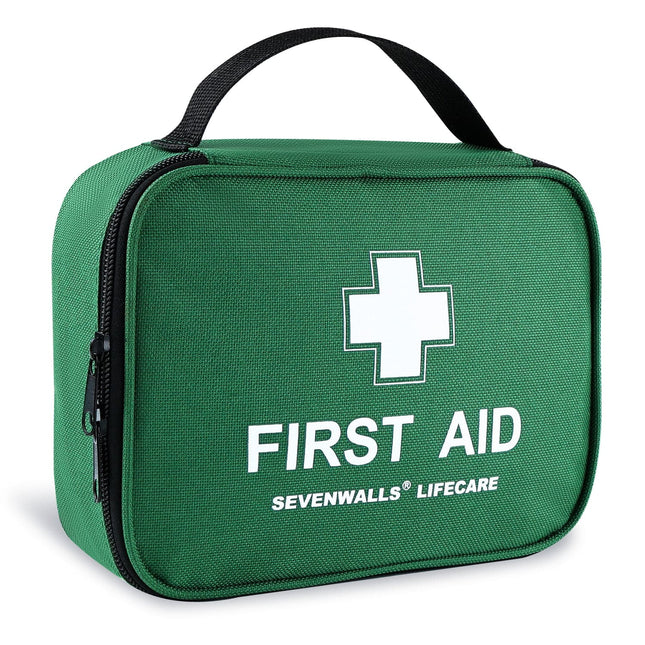
First Aid for Agricultural Chemicals & Pesticide Exposure
15 min reading time
Farm and agricultural workers may come into contact with pesticides, herbicides, fungicides, fertilisers, disinfectants, fuels and other hazardous substances.
These products can cause injury through splashes to the eyes or skin, inhalation of vapour or spray, accidental swallowing or significant contamination of clothing and equipment.
The correct first aid response depends on the specific substance involved. For this reason, the product label and Safety Data Sheet (SDS) should always be checked and followed.
This guide explains how to plan for agricultural chemical exposure, what immediate first aid principles may apply, when to call 999 and why COSHH, product information and emergency arrangements are essential.
Important: do not rely on generic first aid instructions where a product label or Safety Data Sheet gives specific emergency advice. Different agricultural chemicals can require different responses.
What types of agricultural chemicals can cause harm?
Agricultural workplaces can contain many different substances, including:
pesticides;
herbicides;
fungicides;
insecticides;
fertilisers;
disinfectants;
cleaning chemicals;
veterinary chemicals;
fuels and oils;
solvents;
other substances used in machinery, maintenance and crop production.
The hazards vary considerably between products. Some may mainly irritate the skin or eyes, while others can be harmful if inhaled or swallowed.
How can agricultural chemical exposure happen?
Exposure can occur during:
mixing or diluting concentrates;
filling spraying equipment;
applying pesticides or herbicides;
cleaning equipment;
dealing with leaks or spills;
handling contaminated clothing;
entering recently treated areas;
incorrect storage or disposal;
accidental splashes;
equipment failure.
HSE guidance emphasises preventing and controlling exposure before first aid is ever needed. Employers should assess hazardous substances under COSHH and provide suitable control measures. See our COSHH & First Aid Explained guide for the wider workplace requirements.
Four main routes of chemical exposure
Exposure route
What may happen
Immediate priority
Eyes
Irritation, pain, redness or chemical injury.
Begin appropriate irrigation promptly and follow the product instructions.
Skin
Irritation, burns or absorption through the skin depending on the substance.
Remove the source of contamination safely and follow SDS washing instructions.
Inhalation
Airway irritation, coughing, dizziness or breathing problems.
Move away from exposure to fresh air where this can be done safely.
Swallowing
Poisoning, nausea, vomiting, abdominal symptoms or more serious systemic effects.
Seek urgent medical advice and do not induce vomiting unless specifically instructed by a medical professional.
What should you do first after chemical exposure?
The first priority is to avoid further exposure.
If someone has been exposed:
do not enter a contaminated area unless it is safe to do so;
protect yourself before helping;
move the casualty away from the source where this can be done safely;
identify the chemical involved;
check the product label and Safety Data Sheet;
follow the specific first aid instructions provided;
seek medical advice promptly if poisoning or significant exposure is suspected.
Do not put yourself at risk by handling contaminated clothing or entering an area containing fumes, spray or gas without appropriate protection.
Why is the Safety Data Sheet important?
A Safety Data Sheet contains important information about a hazardous chemical, including:
its hazards;
safe handling;
personal protective equipment;
first aid measures;
fire precautions;
spill response;
storage;
disposal.
Section 4 of an SDS normally contains the first aid measures relevant to the product.
Workers should know how to access the SDS quickly rather than trying to find it for the first time during an emergency.
What should you do if pesticide gets in the eyes?
Chemical eye exposure should be taken seriously.
In general:
begin rinsing the affected eye promptly with clean water where the product instructions recommend irrigation;
keep the eyelids open as much as possible;
avoid rubbing the eye;
remove contact lenses if they come out easily and this does not delay rinsing;
continue irrigation for the length of time stated on the product label or SDS;
seek medical help as directed by the product information or if symptoms are significant.
Some chemicals require prolonged irrigation, so always check the SDS rather than assuming one fixed rinsing time is suitable for every substance.
The appropriate response depends on the substance, but removing contamination promptly is usually important.
Where consistent with the product instructions:
move away from the source of contamination;
remove contaminated clothing carefully;
avoid spreading the chemical onto unaffected skin;
rinse or wash the affected skin as directed by the product label or SDS;
place contaminated clothing somewhere it cannot expose other people;
seek medical advice where required.
Anyone helping should avoid direct skin contact with the chemical and use suitable protective gloves or other PPE where available.
Should contaminated clothing be removed?
Often, yes.
Contaminated clothing can keep a chemical in contact with the skin and may continue exposing the casualty.
However, clothing should be removed carefully so the substance is not transferred to:
the rescuer;
other parts of the casualty's body;
other workers;
vehicles or clean areas.
Where contamination is extensive or the substance is particularly hazardous, follow the product emergency procedure and instructions from emergency services.
What should you do after inhaling agricultural chemicals?
If a person has inhaled harmful fumes, vapour, mist or spray:
do not enter the contaminated atmosphere unless it is safe;
move the casualty to fresh air if this can be done without putting yourself at risk;
loosen restrictive clothing where appropriate;
monitor their breathing and responsiveness;
check the product SDS;
seek urgent medical help if they have breathing difficulty, confusion, collapse or other serious symptoms.
Never enter an enclosed or poorly ventilated contaminated space without appropriate training and respiratory protection.
What should you do if pesticide or another chemical is swallowed?
Suspected poisoning should receive medical advice promptly.
If a chemical has been swallowed:
identify the substance and keep the container, label or SDS;
follow the first aid instructions on the product;
do not deliberately make the person vomit;
do not give food or drink unless specifically instructed;
seek urgent medical advice.
NHS guidance advises not trying to make someone sick after they have swallowed something harmful because they could choke. :contentReference[oaicite:1]{index=1}
has suffered a significant chemical exposure and appears seriously unwell.
NHS guidance says poisoning can occur after swallowing, touching or breathing in something harmful and should be taken seriously. :contentReference[oaicite:2]{index=2}
If you are unsure whether a substance is harmful and the person is not in an immediately life-threatening condition, contact NHS 111 for urgent advice.
Should you induce vomiting after pesticide poisoning?
No, not unless a healthcare professional or the specific product guidance explicitly tells you to do so.
Inducing vomiting can create additional risks, including choking or further injury if a corrosive or harmful substance passes through the throat again.
Keep the product container or label available so medical professionals know exactly what substance is involved.
Why should the chemical container or label go with the casualty?
Knowing the exact product can be extremely useful to emergency medical professionals.
Where safe, take:
the original container;
the label;
the Safety Data Sheet;
the product name;
details of the estimated exposure;
the approximate time exposure occurred.
NHS poisoning guidance specifically advises trying to identify what caused the poisoning and taking the substance or its packaging to hospital if possible. :contentReference[oaicite:3]{index=3}
Can symptoms be delayed?
Yes.
Some chemical exposures cause immediate irritation, while others may produce symptoms later.
Possible symptoms of poisoning can include:
nausea or vomiting;
diarrhoea;
drowsiness;
blurred vision;
confusion;
breathing difficulty;
seizures;
loss of consciousness.
Do not assume someone is safe simply because they feel well immediately after significant exposure. Follow the product information and obtain medical advice where required.
Chemical exposure and first aid risk assessment
Emergency planning should begin before hazardous products are used.
An agricultural COSHH or risk assessment should consider:
what substances are used;
how workers may be exposed;
how exposure will be prevented;
required PPE;
washing and decontamination facilities;
spill procedures;
first aid measures;
emergency communication;
access to Safety Data Sheets;
what happens if exposure occurs in a remote location.
HSE guidance on hazardous substances emphasises including emergency arrangements and washing facilities in COSHH planning. :contentReference[oaicite:4]{index=4}
Do farms need emergency eye wash?
Whether dedicated eye-washing equipment is required depends on the substances being used, the risk of eye exposure and the product instructions.
If eye contamination is a foreseeable risk, suitable irrigation should be available quickly enough to be useful in an emergency.
The arrangement should consider:
where chemicals are mixed;
where spraying equipment is filled;
distance to clean running water;
whether workers operate away from fixed facilities;
the first aid instructions in the relevant SDS.
A small eyewash bottle should not automatically be assumed to replace a suitable supply of clean water where prolonged irrigation may be necessary.
Remote pesticide and spraying work
Agricultural spraying may take place some distance from the main farm buildings.
Workers should consider:
how they will call for help;
whether mobile phone coverage is reliable;
how emergency services will locate them;
where clean water or suitable decontamination facilities are available;
whether travelling first aid equipment is needed;
how product labels and SDS information can be accessed.
PPE should be selected according to the product label, COSHH assessment and task being carried out.
Depending on the substance and work, this can include:
suitable chemical-resistant gloves;
protective clothing;
eye or face protection;
protective footwear;
respiratory protective equipment where required.
PPE is a preventive control rather than first aid. It should never be used as a substitute for safer handling systems where exposure can be prevented in other ways.
A spill should be dealt with according to the product's emergency instructions and the workplace spill procedure.
Before attempting to clean a spill:
identify the substance;
keep unnecessary people away;
wear the required PPE;
consider ventilation;
prevent contamination spreading where it is safe to do so;
follow the product SDS;
use the correct spill-control materials.
Do not improvise with unknown chemicals. Some substances can react dangerously with incompatible absorbents, cleaners or other chemicals.
Mixing agricultural chemicals
Mixing and loading can create a particularly high exposure risk because workers may be handling concentrated products.
HSE pesticide guidance recommends measures designed to reduce exposure during preparation, including suitable closed-transfer systems and avoiding unnecessary manual handling of concentrated products. :contentReference[oaicite:5]{index=5}
Workers should:
follow the label instructions;
use the correct measuring and transfer equipment;
wear specified PPE;
avoid eating, drinking or smoking while handling chemicals;
have emergency washing arrangements available;
know what to do if a splash or spill occurs.
Why chemical storage matters for first aid prevention
Many poisoning incidents are preventable.
Agricultural chemicals should be:
stored securely;
kept in their original labelled containers;
protected from unauthorised access;
separated from food, drink and animal feed where required;
managed according to compatibility and storage instructions.
Never transfer pesticides or hazardous chemicals into drink bottles or unlabelled containers.
Common mistakes after chemical exposure
Common errors include:
entering a contaminated area without protection;
failing to identify the substance;
ignoring the product label or SDS;
trying to make someone vomit after swallowing a chemical;
giving food or drink without medical advice;
delaying eye irrigation after a splash;
handling contaminated clothing without gloves;
assuming symptoms must appear immediately;
throwing away the container before medical professionals have identified the product;
failing to call 999 when the casualty develops serious symptoms.
What first aid equipment may be useful?
The exact provision should follow the risk assessment and the substances being used.
Depending on the workplace, relevant equipment may include:
disposable protective gloves;
eye-irrigation equipment where appropriate;
clean water or suitable washing facilities;
sterile dressings;
a suitably stocked workplace first aid kit;
additional emergency equipment specified by the product instructions.
The presence of a first aid kit does not replace appropriate chemical controls, PPE, washing facilities or emergency procedures.
You can view our range of first aid kits when reviewing general workplace first aid provision.
Agricultural chemical exposure checklist
Situation
What to do
Any exposure
Move away from the source safely, identify the chemical and follow the label and SDS.
Eye splash
Begin appropriate irrigation promptly and follow the product-specific instructions.
Skin contamination
Remove contaminated clothing safely and wash or rinse as directed by the SDS.
Inhalation
Move to fresh air where safe and seek medical help if symptoms occur.
Swallowed chemical
Do not induce vomiting. Identify the product and seek urgent medical advice.
Unconscious casualty
Call 999, check breathing and use the recovery position or CPR as appropriate.
Serious symptoms
Call 999 for severe breathing difficulty, seizure, collapse or loss of consciousness.
Medical handover
Provide the product container, label or SDS and details of how and when exposure occurred.
Official HSE and NHS guidance
The Health and Safety Executive provides guidance on pesticides, COSHH and controlling exposure to hazardous substances. The NHS also provides public guidance on recognising and responding to suspected poisoning.
What should you do if pesticide gets in your eyes?
Begin appropriate irrigation promptly and follow the product label or Safety Data Sheet. Avoid rubbing the eye and seek medical advice where the product instructions or symptoms indicate that this is necessary.
Should you make someone vomit if they swallow pesticide?
No. Do not deliberately make someone vomit after swallowing a pesticide or other harmful chemical unless specifically instructed by a healthcare professional. Identify the product and seek urgent medical advice.
Why is the Safety Data Sheet important after chemical exposure?
The Safety Data Sheet identifies the hazards of the product and normally includes specific first aid measures. These product-specific instructions should take priority over generic first aid advice.
When should you call 999 after pesticide exposure?
Call 999 if the casualty has severe breathing difficulty, loses consciousness, has a seizure, stops breathing or develops other serious or rapidly worsening symptoms.
Should contaminated clothing be removed?
Often yes, because contaminated clothing can keep the chemical against the skin. Remove it carefully while protecting yourself and follow the product-specific decontamination instructions.
Can pesticide poisoning symptoms be delayed?
Yes. Some chemical exposures cause immediate symptoms while others may develop later. Follow the product guidance and seek medical advice after significant exposure even if symptoms are not initially severe.
1-2 days delivery
FirstAidKitsUK offers free delivery on all UK orders via Royal Mail 48 Tracked. We offer free next-day delivery on all orders over £30 via Royal Mail 24 Tracked.
Royal Mail 48 Tracked: Orders placed before 16:00 pm are dispatched the same day Mon-Fri, and 11:00 pm Sat. Orders after this threshold will be dispatched the next working day. Delivery takes 2 days, including Saturdays. This service is free for all orders.
Royal Mail 24 Tracked: Orders placed before 16:00 pm Mon-Fri, before 11pm Saturday are dispatched the same day. Orders after this threshold will be dispatched the next working day. Delivery will take place the next working day. This service is free for orders over £30. The charge for this service is £3.99 for orders under £30.
This may not be available during public holidays or weekends in between public holidays.
1-2 days delivery
FirstAidKitsUK offers free delivery on all UK orders via Royal Mail 48 Tracked. We offer free next-day delivery on all orders over £30 via Royal Mail 24 Tracked.
Royal Mail 48 Tracked: Orders placed before 16:00 pm are dispatched the same day Mon-Fri, and 11:00 pm Sat. Orders after this threshold will be dispatched the next working day. Delivery takes 2 days, including Saturdays. This service is free for all orders.
Royal Mail 24 Tracked: Orders placed before 16:00 pm Mon-Fri, before 11pm Saturday are dispatched the same day. Orders after this threshold will be dispatched the next working day. Delivery will take place the next working day. This service is free for orders over £30. The charge for this service is £3.99 for orders under £30.
This may not be available during public holidays or weekends in between public holidays.
1-2 days delivery
FirstAidKitsUK offers free delivery on all UK orders via Royal Mail 48 Tracked. We offer free next-day delivery on all orders over £30 via Royal Mail 24 Tracked.
Royal Mail 48 Tracked: Orders placed before 16:00 pm are dispatched the same day Mon-Fri, and 11:00 pm Sat. Orders after this threshold will be dispatched the next working day. Delivery takes 2 days, including Saturdays. This service is free for all orders.
Royal Mail 24 Tracked: Orders placed before 16:00 pm Mon-Fri, before 11pm Saturday are dispatched the same day. Orders after this threshold will be dispatched the next working day. Delivery will take place the next working day. This service is free for orders over £30. The charge for this service is £3.99 for orders under £30.
This may not be available during public holidays or weekends in between public holidays.
1-2 days delivery
FirstAidKitsUK offers free delivery on all UK orders via Royal Mail 48 Tracked. We offer free next-day delivery on all orders over £30 via Royal Mail 24 Tracked.
Royal Mail 48 Tracked: Orders placed before 16:00 pm are dispatched the same day Mon-Fri, and 11:00 pm Sat. Orders after this threshold will be dispatched the next working day. Delivery takes 2 days, including Saturdays. This service is free for all orders.
Royal Mail 24 Tracked: Orders placed before 16:00 pm Mon-Fri, before 11pm Saturday are dispatched the same day. Orders after this threshold will be dispatched the next working day. Delivery will take place the next working day. This service is free for orders over £30. The charge for this service is £3.99 for orders under £30.
This may not be available during public holidays or weekends in between public holidays.
1-2 days delivery
FirstAidKitsUK offers free delivery on all UK orders via Royal Mail 48 Tracked. We offer free next-day delivery on all orders over £30 via Royal Mail 24 Tracked.
Royal Mail 48 Tracked: Orders placed before 16:00 pm are dispatched the same day Mon-Fri, and 11:00 pm Sat. Orders after this threshold will be dispatched the next working day. Delivery takes 2 days, including Saturdays. This service is free for all orders.
Royal Mail 24 Tracked: Orders placed before 16:00 pm Mon-Fri, before 11pm Saturday are dispatched the same day. Orders after this threshold will be dispatched the next working day. Delivery will take place the next working day. This service is free for orders over £30. The charge for this service is £3.99 for orders under £30.
This may not be available during public holidays or weekends in between public holidays.
1-2 days delivery
FirstAidKitsUK offers free delivery on all UK orders via Royal Mail 48 Tracked. We offer free next-day delivery on all orders over £30 via Royal Mail 24 Tracked.
Royal Mail 48 Tracked: Orders placed before 16:00 pm are dispatched the same day Mon-Fri, and 11:00 pm Sat. Orders after this threshold will be dispatched the next working day. Delivery takes 2 days, including Saturdays. This service is free for all orders.
Royal Mail 24 Tracked: Orders placed before 16:00 pm Mon-Fri, before 11pm Saturday are dispatched the same day. Orders after this threshold will be dispatched the next working day. Delivery will take place the next working day. This service is free for orders over £30. The charge for this service is £3.99 for orders under £30.
This may not be available during public holidays or weekends in between public holidays.
1-2 days delivery
FirstAidKitsUK offers free delivery on all UK orders via Royal Mail 48 Tracked. We offer free next-day delivery on all orders over £30 via Royal Mail 24 Tracked.
Royal Mail 48 Tracked: Orders placed before 16:00 pm are dispatched the same day Mon-Fri, and 11:00 pm Sat. Orders after this threshold will be dispatched the next working day. Delivery takes 2 days, including Saturdays. This service is free for all orders.
Royal Mail 24 Tracked: Orders placed before 16:00 pm Mon-Fri, before 11pm Saturday are dispatched the same day. Orders after this threshold will be dispatched the next working day. Delivery will take place the next working day. This service is free for orders over £30. The charge for this service is £3.99 for orders under £30.
This may not be available during public holidays or weekends in between public holidays.