Farming and agricultural work can involve risks that are very different from those found in an office, shop or other low-risk workplace.
Workers may use heavy machinery, handle livestock, work with chemicals, operate chainsaws or other cutting equipment, work alone and spend long periods in locations that are difficult for emergency services to reach.
Because of these factors, first aid arrangements on a farm should be based on the actual work being carried out, the people involved and how quickly professional medical help could reach an injured person.
This guide explains how farmers, agricultural employers and rural businesses can plan appropriate first aid provision, including first aid kits, travelling kits, trained personnel, emergency communication and arrangements for remote work.
Why is first aid particularly important in agriculture?
Agricultural workplaces combine several types of risk in the same environment. A single farm may include machinery, vehicles, workshops, livestock, chemicals, work at height and isolated outdoor locations.
Potential incidents can include:
cuts and severe bleeding;
crush injuries;
machinery injuries;
falls from height;
injuries caused by livestock;
chemical exposure or poisoning;
burns;
eye injuries;
electric shock;
heat or cold-related illness;
incidents involving lone workers;
medical emergencies occurring far from immediate help.
First aid cannot prevent these incidents, so suitable risk controls must always come first. However, effective first aid arrangements can help ensure that someone who is injured or becomes ill receives appropriate immediate assistance while emergency medical help is arranged.
What does the law require for first aid on farms?
For employers, the Health and Safety (First-Aid) Regulations 1981 require adequate and appropriate equipment, facilities and personnel to enable first aid to be given to employees if they are injured or become ill at work.
The law does not prescribe one specific agricultural first aid kit or a fixed number of first aiders for every farm.
Instead, the employer should carry out a first aid needs assessment and decide what provision is appropriate for the particular workplace.
What should an agricultural first aid needs assessment consider?
There is no single arrangement that will suit every agricultural business. A small livestock farm, a large arable operation and a horticultural business may have very different risks.
The assessment should consider:
the hazards associated with the work;
the number of employees;
where people are working;
whether workers are spread across a large site;
lone working;
seasonal and temporary workers;
shift patterns and working hours;
previous accidents and near misses;
distance from emergency medical services;
mobile phone or radio coverage;
the needs of workers with existing health conditions;
whether travelling first aid kits are required;
visitors, contractors and members of the public who may be present.
The assessment should be reviewed when circumstances change, for example when new machinery is introduced, different chemicals are used, staffing changes or new work activities begin.
Common agricultural risks and first aid considerations
Agricultural hazard
Possible first aid implications
Planning consideration
Machinery and vehicles
Crush injuries, severe cuts, fractures and traumatic injuries.
Consider emergency access, trained first aiders and provision for life-threatening bleeding where the needs assessment identifies the risk.
Livestock
Crushing, kicking, bites, falls and contaminated wounds.
Consider work location, communication and access to suitable first aid equipment.
Chainsaws and cutting equipment
Potentially severe bleeding and traumatic injury.
Remote workers may need travelling first aid equipment and appropriate emergency arrangements.
Chemicals and pesticides
Skin or eye exposure, inhalation or poisoning.
Follow the relevant safety data and COSHH controls and ensure emergency washing or other facilities are available where required.
Working at height
Head injuries, fractures, spinal injury or loss of consciousness.
Emergency planning should consider how emergency services will reach and recover the casualty safely.
Electrical equipment
Electric shock, burns and cardiac arrest.
Electrical isolation and emergency procedures should be understood before an incident occurs.
Remote or lone working
Delay before an injured person is discovered or professional help arrives.
Communication, check-in procedures, location information and travelling first aid provision become especially important.
Extreme weather
Heat exhaustion, heatstroke or hypothermia.
Seasonal conditions and remote outdoor work should form part of emergency planning.
Do farms need first aid kits?
Agricultural employers need adequate and appropriate first aid equipment as part of their overall arrangements.
HSE's Farmwise guidance advises farms to provide a suitably stocked first aid container that can be easily accessed in an emergency.
There is no universal statutory contents list for every farm. The contents should be determined by the first aid needs assessment and the type of work being carried out.
Depending on the risks identified, provision may need to account for:
cuts and wounds;
bleeding;
eye contamination;
burns;
minor injuries;
outdoor and remote work;
additional equipment appropriate to specific identified hazards.
First aid equipment should be protected from contamination, moisture and excessive temperatures and should remain accessible when it is needed.
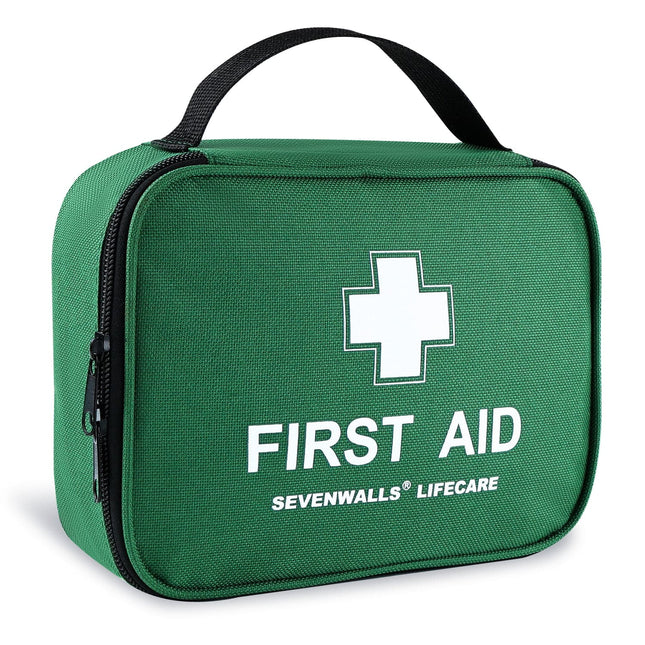
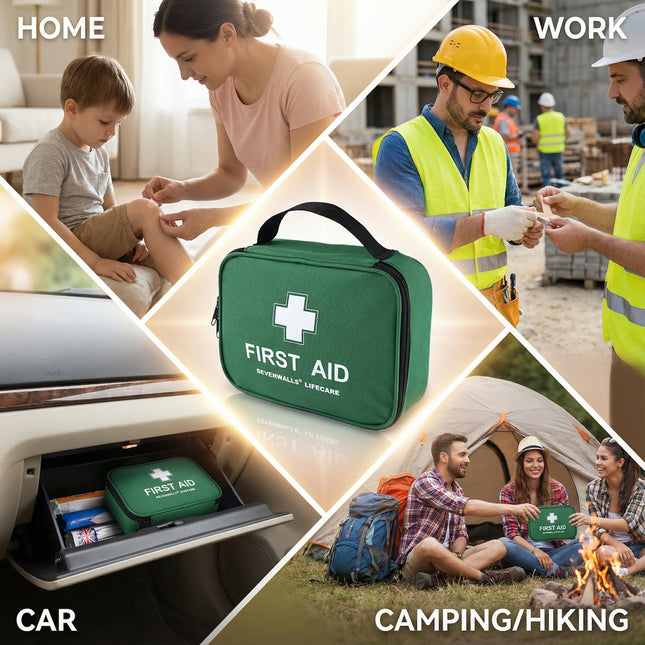
You can view our range of first aid kits when reviewing first aid provision for your workplace.
Should tractors and farm vehicles carry first aid kits?
In agriculture, workers frequently leave the main farm buildings and may work some distance from the primary first aid kit.
HSE's Farmwise guidance specifically recommends considering travelling first aid kits carried on tractors or when particularly hazardous work is being carried out in remote locations.
This does not mean every vehicle in every agricultural business automatically needs the same kit. The decision should follow the needs assessment.
Travelling provision may be particularly appropriate for:
tractor operators;
workers moving between fields;
forestry and woodland work;
fencing and maintenance teams;
workers using chainsaws;
staff working away from the main farmyard;
workers travelling between multiple agricultural sites.
The kit should be placed somewhere it can be reached quickly and should be checked regularly for missing, damaged or expired items.
Remote agricultural work and emergency response
Distance can substantially change first aid needs.
An accident inside a building close to a main road may receive emergency assistance relatively quickly. The same injury in a remote field, woodland or isolated farm building may take considerably longer to reach.
This makes emergency planning especially important.
Farm businesses should consider whether workers can:
call 999 reliably;
give emergency services an accurate location;
provide an OS grid reference, postcode or other precise location information where appropriate;
guide an ambulance to the casualty;
open gates or access points quickly;
communicate where mobile phone coverage is poor;
raise the alarm if they are working alone.
HSE Farmwise recommends ensuring emergency services can identify the location of the premises. For more general workplace planning, see our Workplace Emergency Response Plan guide.
First aid for lone workers on farms
Lone working is common in agriculture and can significantly increase the consequences of an incident.
A person may be capable of calling for assistance after a minor accident but unable to do so after a serious fall, machinery injury or medical emergency.
A lone-working assessment should therefore consider:
what work is being carried out;
whether it is suitable to perform alone;
how often someone will check on the worker;
how the worker can raise an alarm;
whether phones, radios or personal alarm systems are suitable;
how their location will be identified;
how long emergency assistance might take to arrive;
Do agricultural businesses need trained first aiders?
The number and level of trained first aiders should follow the first aid needs assessment rather than a universal farm-specific ratio.
Factors that can increase the need for trained first aiders include:
higher-risk work;
large numbers of workers;
workers spread across multiple locations;
long working hours or shift patterns;
remote sites;
seasonal workers;
distance from emergency services.
An employer should also ensure that suitable first aid cover remains available during holidays, sickness and other foreseeable absences.
Where the needs assessment determines that a trained first aider is not required, an employer should still appoint someone to take charge of first aid arrangements.
What does an appointed person do on a farm?
An appointed person may be responsible for:
taking charge of first aid arrangements;
looking after first aid equipment and facilities;
replenishing first aid supplies;
calling emergency services when necessary.
An appointed person is not the same as a trained first aider and should not provide treatment beyond their competence.
Agricultural machinery can create a foreseeable risk of severe injury. Employers should first control that risk through appropriate guarding, safe systems of work, maintenance, training and other preventive measures.
First aid arrangements should then reflect the residual risks that remain.
HSE's updated first aid at work guidance specifically asks employers to consider whether life-threatening bleeding is a foreseeable risk when carrying out their first aid needs assessment.
Where it is identified as a significant risk, employers should consider what additional training, equipment and procedures are appropriate.
Crush injuries can occur around vehicles, machinery, livestock, gates, trailers and heavy equipment.
These incidents can be serious even when external injuries initially appear limited. The priority should be to make the situation safe without placing additional people at risk and obtain emergency medical assistance where serious injury is suspected.
Never enter an unsafe area or attempt a rescue involving machinery, unstable equipment, confined spaces or other uncontrolled hazards unless appropriate procedures and competence are in place.
Livestock can cause serious injuries through crushing, kicking, trampling, bites or sudden movement.
Even apparently minor wounds can be contaminated, particularly where workers are exposed to soil, animal waste or dirty equipment.
Risk control should focus primarily on safe handling systems, suitable facilities and avoiding unnecessary exposure to aggressive or unpredictable animals.
First aid planning should then consider the types of injury that could realistically occur and how an injured worker would receive assistance.
Working at height in agriculture
Falls can occur from ladders, roofs, machinery, stacks, platforms and other elevated work areas.
The first priority is preventing falls. However, emergency arrangements should also consider what would happen if a serious fall occurred.
Workers should know how to call for help, and emergency services must be able to reach the casualty.
A person with a suspected serious head, neck or spinal injury should not be moved unnecessarily unless remaining where they are presents an immediate danger.
Seasonal and temporary agricultural workers
Agricultural businesses often employ additional workers during harvesting, fruit picking, planting and other seasonal periods.
First aid arrangements should be reviewed when workforce numbers increase significantly.
Employers should make sure temporary workers know:
where first aid kits are located;
who the first aiders or appointed persons are;
how to call for emergency assistance;
what to do if someone is injured;
how to identify their location when working remotely.
Language and communication difficulties should also be considered where workers may not have English as their first language.
Should farms have more than one first aid kit?
There is no universal legal number of first aid kits for a farm.
However, one kit located in the farmhouse or main office may not provide reasonable access if workers are spread across multiple buildings, fields or remote areas.
The needs assessment should consider:
travel time to the nearest kit;
the size of the farm;
separate workshops or livestock buildings;
remote fields;
farm vehicles;
multiple teams working simultaneously.
A combination of fixed first aid points and travelling kits may therefore be more appropriate than relying on one central kit.
How should farm first aid kits be stored?
First aid equipment should be readily accessible but protected from conditions that could damage its contents.
Agricultural environments can expose equipment to:
dust;
mud;
moisture;
fertilisers and chemicals;
extreme temperatures;
vehicle vibration and impact;
pests.
Kits should therefore be stored in suitable containers and locations and inspected regularly.
Used, damaged or expired supplies should be replaced promptly.
How often should agricultural first aid kits be checked?
The law does not prescribe one universal inspection interval for every first aid kit.
The frequency should reflect usage and workplace conditions. A travelling kit used frequently in a tractor or work vehicle may require more frequent checks than a kit stored in a clean office.
Checks should confirm that:
the kit is still in its designated location;
the container is clean and undamaged;
supplies have not been used without replacement;
packaging remains intact;
items have not been damaged by moisture or contamination;
time-sensitive items remain within their usable dates;
the contents still match the current risk assessment.
Emergency information workers should know
A well-stocked kit is only one part of effective first aid provision.
Workers should also know:
where first aid equipment is kept;
who the first aiders and appointed persons are;
how to contact emergency services;
the exact location or grid reference of the farm;
how to direct an ambulance to remote areas;
how to raise the alarm when working alone;
what emergency procedures apply to particularly hazardous activities.
HSE guidance recommends that employees are informed about first aid arrangements, including where equipment, facilities and personnel can be found.
Recording agricultural accidents
Workplace accidents should be recorded where applicable, and certain work-related injuries, diseases and dangerous occurrences must be reported under RIDDOR.
Internal accident records can also help identify patterns and determine whether first aid arrangements or preventive controls need to change.
Repeated cuts from one task, for example, may indicate that simply replacing dressings is not enough; the underlying work process should be reviewed.
For the distinction between ordinary accident recording and statutory reporting, see our RIDDOR and First Aid Explained guide.
Agricultural first aid planning checklist
Area to review
Questions to ask
Risk assessment
Have the actual injuries and health emergencies that could occur during agricultural work been considered?
First aid personnel
Are enough trained first aiders or appointed persons available throughout working hours?
Main first aid equipment
Are suitably stocked kits accessible where workers need them?
Travelling kits
Do tractors, remote workers or teams carrying out hazardous tasks need portable first aid provision?
Lone workers
Can they raise an alarm and can someone locate them if they become incapacitated?
Emergency access
Can emergency services identify and reach the farm and remote work areas quickly?
Communication
Is mobile coverage reliable, or are radios or alternative systems required?
Hazardous substances
Do COSHH assessments identify the necessary emergency and first aid measures?
Seasonal workers
Have arrangements been reviewed when workforce numbers or working patterns change?
Kit maintenance
Are contents inspected, replenished and protected from agricultural conditions?
Emergency information
Do workers know who to contact, where the equipment is and how to provide an accurate location?
Official HSE guidance for agricultural businesses
The Health and Safety Executive publishes Farmwise (HSG270), which provides detailed health and safety guidance for farming and agricultural work. It includes specific sections covering first aid, emergency arrangements, machinery, livestock, chemicals, lone working and other agricultural risks.
Employers and farm businesses can refer directly to the HSE Farmwise guidance when reviewing their arrangements.
Effective first aid provision on a farm is not simply a matter of keeping one first aid kit in the farmhouse.
Agricultural businesses should consider where people actually work, what hazards they face, whether they work alone, how far they may be from professional medical assistance and how emergency services would locate and reach them.
For some farms, appropriate provision may include several first aid points, travelling kits, trained first aiders, reliable communication equipment and clearly planned emergency procedures.
The most important principle is that first aid arrangements should follow the risks identified through the needs assessment and should be reviewed whenever the workforce, activities or working environment change.
First Aid for Farms & Agriculture — FAQ
Do farms legally need first aid provision?
Agricultural employers must provide adequate and appropriate first aid equipment, facilities and personnel for employees. The exact provision should be determined through a first aid needs assessment rather than a fixed farm-specific rule.
Does every tractor need a first aid kit?
There is no universal rule requiring an identical first aid kit in every tractor. However, HSE Farmwise specifically advises considering travelling first aid kits on tractors and for particularly hazardous work carried out away from the main premises. The decision should reflect the first aid needs assessment.
How many first aid kits does a farm need?
There is no fixed legal number. The number and location of kits should reflect the size of the farm, the number of workers, the hazards present and how far employees may be from the main first aid equipment.
Does every farm need a trained first aider?
Not necessarily. The need for trained first aiders and the level of training required should be determined by the first aid needs assessment. Where a trained first aider is not required, an employer should still appoint someone to take charge of first aid arrangements.
What should be considered for lone workers on farms?
Employers should consider how lone workers will raise an alarm, how their location will be identified, how long help may take to arrive and whether travelling first aid equipment or additional communication arrangements are necessary.
Should farm first aid kits include equipment for severe bleeding?
The contents should be based on the first aid needs assessment. Where life-threatening bleeding is identified as a foreseeable workplace risk, employers should consider what additional equipment, training and procedures are appropriate.
1-2 days delivery
FirstAidKitsUK offers free delivery on all UK orders via Royal Mail 48 Tracked. We offer free next-day delivery on all orders over £30 via Royal Mail 24 Tracked.
Royal Mail 48 Tracked: Orders placed before 16:00 pm are dispatched the same day Mon-Fri, and 11:00 pm Sat. Orders after this threshold will be dispatched the next working day. Delivery takes 2 days, including Saturdays. This service is free for all orders.
Royal Mail 24 Tracked: Orders placed before 16:00 pm Mon-Fri, before 11pm Saturday are dispatched the same day. Orders after this threshold will be dispatched the next working day. Delivery will take place the next working day. This service is free for orders over £30. The charge for this service is £3.99 for orders under £30.
This may not be available during public holidays or weekends in between public holidays.
1-2 days delivery
FirstAidKitsUK offers free delivery on all UK orders via Royal Mail 48 Tracked. We offer free next-day delivery on all orders over £30 via Royal Mail 24 Tracked.
Royal Mail 48 Tracked: Orders placed before 16:00 pm are dispatched the same day Mon-Fri, and 11:00 pm Sat. Orders after this threshold will be dispatched the next working day. Delivery takes 2 days, including Saturdays. This service is free for all orders.
Royal Mail 24 Tracked: Orders placed before 16:00 pm Mon-Fri, before 11pm Saturday are dispatched the same day. Orders after this threshold will be dispatched the next working day. Delivery will take place the next working day. This service is free for orders over £30. The charge for this service is £3.99 for orders under £30.
This may not be available during public holidays or weekends in between public holidays.
1-2 days delivery
FirstAidKitsUK offers free delivery on all UK orders via Royal Mail 48 Tracked. We offer free next-day delivery on all orders over £30 via Royal Mail 24 Tracked.
Royal Mail 48 Tracked: Orders placed before 16:00 pm are dispatched the same day Mon-Fri, and 11:00 pm Sat. Orders after this threshold will be dispatched the next working day. Delivery takes 2 days, including Saturdays. This service is free for all orders.
Royal Mail 24 Tracked: Orders placed before 16:00 pm Mon-Fri, before 11pm Saturday are dispatched the same day. Orders after this threshold will be dispatched the next working day. Delivery will take place the next working day. This service is free for orders over £30. The charge for this service is £3.99 for orders under £30.
This may not be available during public holidays or weekends in between public holidays.
1-2 days delivery
FirstAidKitsUK offers free delivery on all UK orders via Royal Mail 48 Tracked. We offer free next-day delivery on all orders over £30 via Royal Mail 24 Tracked.
Royal Mail 48 Tracked: Orders placed before 16:00 pm are dispatched the same day Mon-Fri, and 11:00 pm Sat. Orders after this threshold will be dispatched the next working day. Delivery takes 2 days, including Saturdays. This service is free for all orders.
Royal Mail 24 Tracked: Orders placed before 16:00 pm Mon-Fri, before 11pm Saturday are dispatched the same day. Orders after this threshold will be dispatched the next working day. Delivery will take place the next working day. This service is free for orders over £30. The charge for this service is £3.99 for orders under £30.
This may not be available during public holidays or weekends in between public holidays.
1-2 days delivery
FirstAidKitsUK offers free delivery on all UK orders via Royal Mail 48 Tracked. We offer free next-day delivery on all orders over £30 via Royal Mail 24 Tracked.
Royal Mail 48 Tracked: Orders placed before 16:00 pm are dispatched the same day Mon-Fri, and 11:00 pm Sat. Orders after this threshold will be dispatched the next working day. Delivery takes 2 days, including Saturdays. This service is free for all orders.
Royal Mail 24 Tracked: Orders placed before 16:00 pm Mon-Fri, before 11pm Saturday are dispatched the same day. Orders after this threshold will be dispatched the next working day. Delivery will take place the next working day. This service is free for orders over £30. The charge for this service is £3.99 for orders under £30.
This may not be available during public holidays or weekends in between public holidays.
1-2 days delivery
FirstAidKitsUK offers free delivery on all UK orders via Royal Mail 48 Tracked. We offer free next-day delivery on all orders over £30 via Royal Mail 24 Tracked.
Royal Mail 48 Tracked: Orders placed before 16:00 pm are dispatched the same day Mon-Fri, and 11:00 pm Sat. Orders after this threshold will be dispatched the next working day. Delivery takes 2 days, including Saturdays. This service is free for all orders.
Royal Mail 24 Tracked: Orders placed before 16:00 pm Mon-Fri, before 11pm Saturday are dispatched the same day. Orders after this threshold will be dispatched the next working day. Delivery will take place the next working day. This service is free for orders over £30. The charge for this service is £3.99 for orders under £30.
This may not be available during public holidays or weekends in between public holidays.
1-2 days delivery
FirstAidKitsUK offers free delivery on all UK orders via Royal Mail 48 Tracked. We offer free next-day delivery on all orders over £30 via Royal Mail 24 Tracked.
Royal Mail 48 Tracked: Orders placed before 16:00 pm are dispatched the same day Mon-Fri, and 11:00 pm Sat. Orders after this threshold will be dispatched the next working day. Delivery takes 2 days, including Saturdays. This service is free for all orders.
Royal Mail 24 Tracked: Orders placed before 16:00 pm Mon-Fri, before 11pm Saturday are dispatched the same day. Orders after this threshold will be dispatched the next working day. Delivery will take place the next working day. This service is free for orders over £30. The charge for this service is £3.99 for orders under £30.
This may not be available during public holidays or weekends in between public holidays.