Paediatric first aid is an important part of keeping babies and young children safe in nurseries, preschools, childminding settings and other early years environments.
Unlike general workplace first aid, early years providers in England must also meet specific requirements under the Early Years Foundation Stage (EYFS) statutory framework. These rules cover paediatric first aid training, staff availability, outings, first aid equipment and the recording of accidents and treatment.
This guide explains the main requirements in clear terms and helps early years providers understand the difference between general workplace first aid duties and the additional rules that apply when caring for children from birth to five.
Important: this guide applies to England. Scotland, Wales and Northern Ireland have separate early years frameworks and requirements.
What are the paediatric first aid requirements for early years settings?
Early years providers in England must follow the EYFS statutory framework. This includes nurseries, preschools, childminders, reception classes and other registered early years providers.
One of the most important requirements is that at least one person with a current full paediatric first aid certificate must be:
on the premises;
available whenever children are present; and
available to accompany children on outings.
The number of trained people needed in practice may be higher than one. Providers should consider the number of children, number of staff, size and layout of the premises, working patterns and how quickly a trained person could respond to an emergency.
Nurseries, childminders and schools: who does the EYFS apply to?
The EYFS applies to registered early years provision in England, including:
day nurseries;
preschools and playgroups;
registered childminders;
nursery classes;
reception classes in schools; and
other providers registered on the Early Years Register or through a childminder agency.
This is different from general school first aid provision. If you are looking at provision across a wider school environment, see our First Aid in Schools and Educational Settings guide.
Full paediatric first aid vs emergency paediatric first aid
The EYFS distinguishes between a full paediatric first aid course and an emergency paediatric first aid course.
Training
Typical role under EYFS
Does it satisfy the main on-site PFA requirement?
Full Paediatric First Aid
Comprehensive paediatric first aid training meeting the EYFS Annex A criteria.
Yes, provided the certificate is current.
Emergency Paediatric First Aid
Shorter emergency-focused training that can be relevant to staff qualification and ratio requirements in certain circumstances.
No. The person required to be available on the premises and on outings must hold a full PFA certificate.
How many paediatric first aiders does a nursery need?
The EYFS does not set one universal staffing number such as “one paediatric first aider for every ten children”.
The minimum requirement is that a person with a current full PFA certificate is available whenever children are present, but providers must consider whether that minimum is sufficient for their individual setting.
Factors to consider include:
the number and ages of children;
the size and layout of the premises;
separate rooms or floors;
staff breaks, sickness and annual leave;
opening hours and shift patterns;
outings and off-site activities;
children with known medical needs;
how quickly a trained person could reach an incident.
A setting with one trained person on paper may therefore need several trained staff to ensure suitable cover throughout the working day.
Childminders must also meet the EYFS paediatric first aid requirements that apply to their provider type.
A childminder should hold a current paediatric first aid certificate. Any assistant who may be left in sole charge of children for any period should also hold an appropriate current paediatric first aid certificate.
Childminders should also consider how first aid would be provided when:
working away from the home or registered premises;
taking children to parks, groups or other locations;
travelling by vehicle or public transport;
caring for children with allergies, asthma or other known needs.
Paediatric first aid requirements during meals and snacks
Safer eating is now an important part of the EYFS requirements.
While children are eating, there should always be a member of staff in the room who holds a valid full paediatric first aid certificate consistent with the EYFS criteria.
This requirement is particularly important because choking and allergic reactions can develop quickly in young children.
Providers should also ensure that staff understand each child's:
food allergies;
food intolerances;
special dietary requirements;
relevant health requirements;
individual allergy or emergency action plans where appropriate.
Yes. Paediatric first aid training must be renewed every three years.
Providers should monitor certificate expiry dates and arrange renewal before a certificate expires. Waiting until the final few days can create a staffing problem if the setting no longer has sufficient qualified cover.
A practical training record could include:
staff member's name;
course completed;
training provider;
certificate date;
expiry date;
planned renewal date.
Providers should select a competent training provider and make sure the course meets the relevant EYFS paediatric first aid criteria.
Do newly qualified early years staff need paediatric first aid training?
Additional rules apply to certain staff who hold level 2 or level 3 early years qualifications.
Staff who obtained a relevant level 2 or level 3 qualification on or after 30 June 2016 must have either a full paediatric first aid certificate or an emergency paediatric first aid certificate within three months of starting work if they are to be included in the required staff-to-child ratios at level 2 or level 3.
This requirement should not be confused with the separate rule requiring a person with a full PFA certificate to be available whenever children are present.
Do nurseries need a first aid kit?
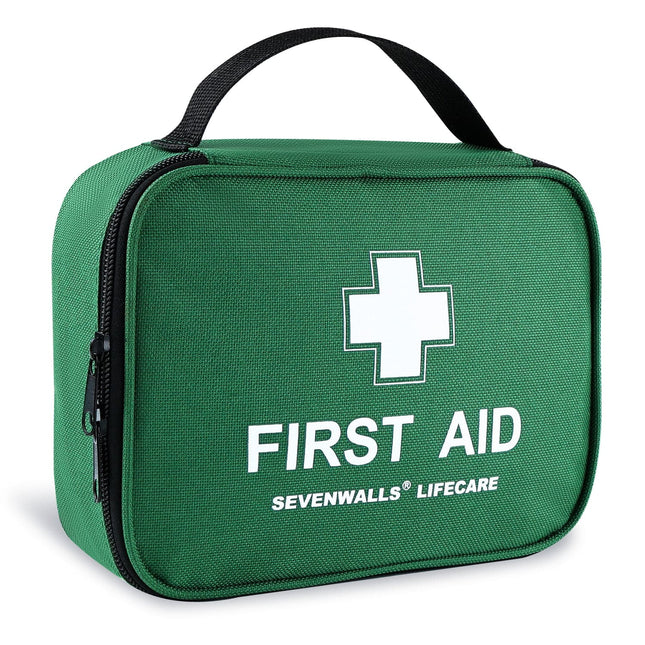
Early years providers should ensure that a first aid box is always accessible and contains appropriate items for use with children.
There is no single statutory contents list that is suitable for every setting. The contents should reflect the risks, number of children, activities and environment.
A nursery or early years setting may need to consider provision for:
minor cuts and grazes;
minor burns;
eye injuries;
outdoor play;
trips and outings;
different areas of a large or split-level building.
First aid kits should be accessible to staff but stored appropriately so that young children cannot freely access their contents.
For a broader explanation of what to consider when selecting equipment, see our School First Aid Kits Guide.
You can also view our range of first aid kits when reviewing your setting's first aid provision.
Should medicines be kept inside a first aid kit?
Medicines and first aid equipment should be managed separately.
Early years settings have specific rules covering the administration of medicines, parental permission and record keeping. A standard first aid kit should not be treated as general medicine storage.
Providers should have clear procedures for medicines and ensure staff understand the difference between administering medication under an agreed care arrangement and providing immediate first aid.
What first aid provision is needed on nursery outings?
The requirement for paediatric first aid does not stop when children leave the premises.
A person with a current full paediatric first aid certificate should accompany children on outings.
Before an outing, providers should consider:
the number and ages of children attending;
the type and location of the activity;
how far the group will be from emergency medical help;
known medical needs and allergies;
whether additional first aid equipment is required;
how emergency contact information will be available;
how an incident would be managed without leaving the remaining children inadequately supervised.
A suitable travelling first aid kit may be necessary depending on the activity and risk assessment.
Our First Aid for School Trips guide covers many of the practical considerations that also apply to early years outings.
What accidents and first aid treatment should be recorded?
Early years providers should keep written records of accidents, injuries and first aid treatment.
Parents or carers should be informed of an accident or injury involving their child and any first aid treatment given on the same day, or as soon as reasonably practicable.
A useful incident record would normally identify:
the child involved;
date, time and location;
what happened;
the injury or symptoms observed;
first aid provided;
who provided the treatment;
what happened afterwards;
when and how the parent or carer was informed.
Serious incidents may also need to be reported to Ofsted or the relevant childminder agency, and separate RIDDOR duties can apply in certain circumstances.
Do nurseries have to report serious accidents to Ofsted?
Registered providers must notify Ofsted, or the childminder agency with which they are registered, of certain serious accidents, illnesses, injuries or deaths involving a child in their care.
Where notification is required, it should be made as soon as reasonably practicable and within the applicable statutory timeframe.
Providers should not assume that every minor first aid incident is reportable. Internal accident recording, parent notification, Ofsted notification and RIDDOR reporting are separate processes with different thresholds.
Paediatric first aid and children with additional medical needs
A general first aid arrangement may not be enough for every child.
Providers should consider known conditions and individual needs when planning emergency arrangements. Examples can include:
severe allergies and risk of anaphylaxis;
asthma;
epilepsy or seizures;
diabetes;
other conditions requiring an individual healthcare or emergency plan.
Relevant staff should know where emergency medication is stored, who is authorised or trained to assist, and what action should be taken in an emergency.
Does every member of nursery staff need paediatric first aid training?
No. The EYFS does not state that every member of staff must hold a full PFA certificate.
However, relying on only one trained person can be difficult in practice because providers must maintain adequate cover during:
staff breaks;
sickness;
annual leave;
different shifts;
outings;
meal and snack times;
activities taking place in separate parts of a building.
Providers should therefore determine the number of trained staff needed to maintain effective cover rather than treating one certificate as automatically sufficient.
Common paediatric first aid compliance mistakes
Common problems include:
allowing a PFA certificate to expire;
assuming emergency PFA always satisfies the full PFA requirement;
having only one qualified person with no cover for absence;
forgetting paediatric first aid requirements for outings;
not ensuring appropriate PFA cover while children are eating;
keeping an incomplete or poorly maintained first aid kit;
failing to record first aid treatment;
not informing parents or carers after an accident;
failing to include children's individual medical needs in emergency planning.
Practical paediatric first aid checklist for early years providers
Check
What to confirm
Full PFA cover
A person with a current full PFA certificate is available whenever children are present.
Outings
A suitably qualified person accompanies children off-site.
Eating
A member of staff with a valid full PFA certificate is in the room while children are eating.
Certificate dates
Expiry dates are monitored and renewal is arranged before the three-year validity period ends.
First aid equipment
An accessible and appropriately stocked first aid box is available.
Staffing cover
Breaks, absence, shifts and building layout do not leave children without suitable cover.
Medical needs
Known allergies and other individual health requirements are incorporated into emergency arrangements.
Records
Accidents, injuries and first aid treatment are recorded and parents or carers are informed appropriately.
Paediatric first aid in early years settings is more than simply keeping a first aid box on the premises.
Providers in England must combine suitable equipment with trained people, reliable staffing cover, appropriate arrangements for outings and meal times, clear records and consideration of each child's needs.
The most effective approach is to treat paediatric first aid as an ongoing part of safeguarding and risk management. Training dates, staffing arrangements, equipment and emergency procedures should all be reviewed regularly so that the setting remains prepared when circumstances change.
Paediatric First Aid for Nurseries & Childminders — FAQ
Does a nursery legally need a paediatric first aider?
Early years providers in England must meet the EYFS paediatric first aid requirements. At least one person with a current full paediatric first aid certificate must be on the premises and available whenever children are present.
Does a paediatric first aider have to go on nursery outings?
Yes. A person with a current full paediatric first aid certificate should accompany children on outings covered by the EYFS requirements.
How long is a paediatric first aid certificate valid?
Paediatric first aid training must be renewed every three years. Providers should monitor expiry dates and arrange renewal before certificates expire.
Does every nursery employee need paediatric first aid training?
No. The EYFS does not require every employee to hold a full PFA certificate. However, providers need enough trained staff to maintain suitable cover throughout the day, including during breaks, absence, outings and meal times.
Does a nursery need a first aid kit?
Early years providers should ensure that an accessible first aid box with appropriate contents is available for use with children. The contents should reflect the risks and needs of the setting.
Does a paediatric first aider need to be present while children are eating?
Yes. While children are eating, there should be a member of staff in the room with a valid full paediatric first aid certificate that meets the EYFS criteria.
1-2 days delivery
FirstAidKitsUK offers free delivery on all UK orders via Royal Mail 48 Tracked. We offer free next-day delivery on all orders over £30 via Royal Mail 24 Tracked.
Royal Mail 48 Tracked: Orders placed before 16:00 pm are dispatched the same day Mon-Fri, and 11:00 pm Sat. Orders after this threshold will be dispatched the next working day. Delivery takes 2 days, including Saturdays. This service is free for all orders.
Royal Mail 24 Tracked: Orders placed before 16:00 pm Mon-Fri, before 11pm Saturday are dispatched the same day. Orders after this threshold will be dispatched the next working day. Delivery will take place the next working day. This service is free for orders over £30. The charge for this service is £3.99 for orders under £30.
This may not be available during public holidays or weekends in between public holidays.
1-2 days delivery
FirstAidKitsUK offers free delivery on all UK orders via Royal Mail 48 Tracked. We offer free next-day delivery on all orders over £30 via Royal Mail 24 Tracked.
Royal Mail 48 Tracked: Orders placed before 16:00 pm are dispatched the same day Mon-Fri, and 11:00 pm Sat. Orders after this threshold will be dispatched the next working day. Delivery takes 2 days, including Saturdays. This service is free for all orders.
Royal Mail 24 Tracked: Orders placed before 16:00 pm Mon-Fri, before 11pm Saturday are dispatched the same day. Orders after this threshold will be dispatched the next working day. Delivery will take place the next working day. This service is free for orders over £30. The charge for this service is £3.99 for orders under £30.
This may not be available during public holidays or weekends in between public holidays.
1-2 days delivery
FirstAidKitsUK offers free delivery on all UK orders via Royal Mail 48 Tracked. We offer free next-day delivery on all orders over £30 via Royal Mail 24 Tracked.
Royal Mail 48 Tracked: Orders placed before 16:00 pm are dispatched the same day Mon-Fri, and 11:00 pm Sat. Orders after this threshold will be dispatched the next working day. Delivery takes 2 days, including Saturdays. This service is free for all orders.
Royal Mail 24 Tracked: Orders placed before 16:00 pm Mon-Fri, before 11pm Saturday are dispatched the same day. Orders after this threshold will be dispatched the next working day. Delivery will take place the next working day. This service is free for orders over £30. The charge for this service is £3.99 for orders under £30.
This may not be available during public holidays or weekends in between public holidays.
1-2 days delivery
FirstAidKitsUK offers free delivery on all UK orders via Royal Mail 48 Tracked. We offer free next-day delivery on all orders over £30 via Royal Mail 24 Tracked.
Royal Mail 48 Tracked: Orders placed before 16:00 pm are dispatched the same day Mon-Fri, and 11:00 pm Sat. Orders after this threshold will be dispatched the next working day. Delivery takes 2 days, including Saturdays. This service is free for all orders.
Royal Mail 24 Tracked: Orders placed before 16:00 pm Mon-Fri, before 11pm Saturday are dispatched the same day. Orders after this threshold will be dispatched the next working day. Delivery will take place the next working day. This service is free for orders over £30. The charge for this service is £3.99 for orders under £30.
This may not be available during public holidays or weekends in between public holidays.
1-2 days delivery
FirstAidKitsUK offers free delivery on all UK orders via Royal Mail 48 Tracked. We offer free next-day delivery on all orders over £30 via Royal Mail 24 Tracked.
Royal Mail 48 Tracked: Orders placed before 16:00 pm are dispatched the same day Mon-Fri, and 11:00 pm Sat. Orders after this threshold will be dispatched the next working day. Delivery takes 2 days, including Saturdays. This service is free for all orders.
Royal Mail 24 Tracked: Orders placed before 16:00 pm Mon-Fri, before 11pm Saturday are dispatched the same day. Orders after this threshold will be dispatched the next working day. Delivery will take place the next working day. This service is free for orders over £30. The charge for this service is £3.99 for orders under £30.
This may not be available during public holidays or weekends in between public holidays.
1-2 days delivery
FirstAidKitsUK offers free delivery on all UK orders via Royal Mail 48 Tracked. We offer free next-day delivery on all orders over £30 via Royal Mail 24 Tracked.
Royal Mail 48 Tracked: Orders placed before 16:00 pm are dispatched the same day Mon-Fri, and 11:00 pm Sat. Orders after this threshold will be dispatched the next working day. Delivery takes 2 days, including Saturdays. This service is free for all orders.
Royal Mail 24 Tracked: Orders placed before 16:00 pm Mon-Fri, before 11pm Saturday are dispatched the same day. Orders after this threshold will be dispatched the next working day. Delivery will take place the next working day. This service is free for orders over £30. The charge for this service is £3.99 for orders under £30.
This may not be available during public holidays or weekends in between public holidays.
1-2 days delivery
FirstAidKitsUK offers free delivery on all UK orders via Royal Mail 48 Tracked. We offer free next-day delivery on all orders over £30 via Royal Mail 24 Tracked.
Royal Mail 48 Tracked: Orders placed before 16:00 pm are dispatched the same day Mon-Fri, and 11:00 pm Sat. Orders after this threshold will be dispatched the next working day. Delivery takes 2 days, including Saturdays. This service is free for all orders.
Royal Mail 24 Tracked: Orders placed before 16:00 pm Mon-Fri, before 11pm Saturday are dispatched the same day. Orders after this threshold will be dispatched the next working day. Delivery will take place the next working day. This service is free for orders over £30. The charge for this service is £3.99 for orders under £30.
This may not be available during public holidays or weekends in between public holidays.