First Aid Requirements for Warehouses, Storage Facilities and Logistics
6 min reading time
Warehouses, distribution centres and logistics operations face unique safety risks: manual handling injuries, slips and trips, pallet truck accidents, moving vehicles, cuts, and burns. Because of this, UK law requires employers to provide adequate and appropriate first aid for all staff, including shift workers, pickers, forklift operators, drivers and visitors.
This guide explains the first aid requirements for warehouses and logistics businesses under the Health and Safety (First-Aid) Regulations 1981, what equipment you need, and how to stay compliant with HSE expectations.
Yes. All warehouse and logistics environments must provide first aid equipment, information and personnel suitable for the risks on site. Because warehouses are usually medium or higher-risk workplaces, they generally require more than the minimum provision recommended for offices or retail environments.
Main Risks in Warehouse & Logistics Environments
Hazard Type
Examples
Impact on First Aid Provision
Manual Handling
Lifting, carrying, loading pallets.
Need for bandages, cold packs, large dressings.
Moving Vehicles
Forklifts, pallet trucks, trolleys, vans.
First aid kits must be easily accessible; consider trauma items depending on risk assessment.
Cuts & Abrasions
Box cutters, packaging tools, sharp edges.
Assorted plasters, sterile dressings, eye wash.
Burns
Heat sealers, hot shrink-wrap equipment.
Burn gel or burn dressings.
Slips & Trips
Spills, wet surfaces, uneven loading bays.
Dressings, bandages, foil blanket.
Chemical Exposure
Cleaning chemicals, battery leaks.
Eye wash pods, gloves.
Lone Working
Night shifts, remote pick locations.
Compact kits, clear emergency procedures, communication systems.
What First Aid Kits Do Warehouses Need?
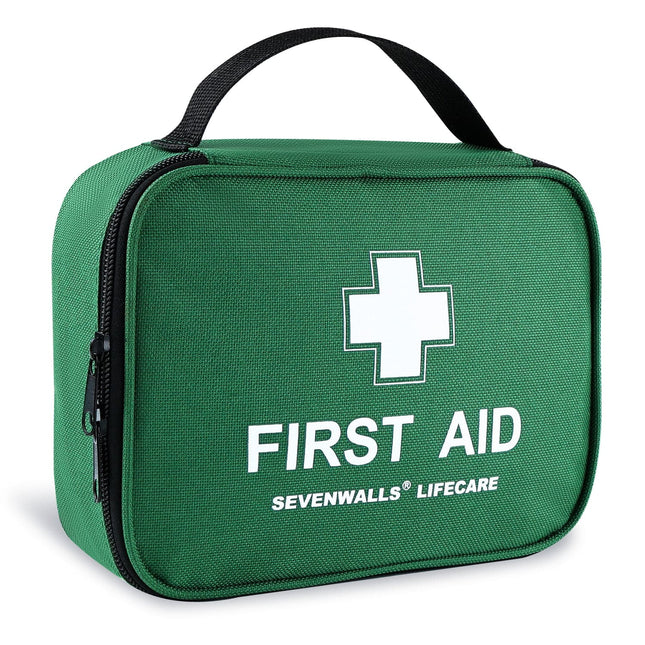
Most warehouses require medium or large BS 8599-1 workplace first aid kits, depending on staff numbers and risk level. You can view full kit size guidance in our First Aid Kit Sizes Guide.
Additional Equipment for Higher-Risk Warehouses (Non-Clinical)
Some warehouse environments may require additional safety equipment, depending on the outcome of the first aid needs assessment. Examples may include:
Large wound dressings
Additional sterile pads and bandages
Extra eye wash bottles or stations
Additional burn dressings
High-visibility storage locations for first aid supplies
These items are included only as general examples. Employers should determine all requirements through their risk assessment.
Do Warehouses Need Trauma Supplies?
Some higher-risk warehouses choose to keep additional trauma-focused supplies (non-clinical) if their risk assessment identifies hazards such as heavy loads, vehicle movements or large equipment. These may include:
Large trauma dressings
Extra-absorbent sterile dressings
Additional bandages
Clearly labelled trauma grab bags
This does not replace emergency services. It simply ensures staff have appropriate, immediate supplies available while waiting for professional help.
Most warehouses should have at least one Emergency First Aider at Work (EFAW) available at all times. Larger warehouses or those operating multiple shifts may need more.
1-2 days delivery
FirstAidKitsUK offers free delivery on all UK orders via Royal Mail 48 Tracked. We offer free next-day delivery on all orders over £30 via Royal Mail 24 Tracked.
Royal Mail 48 Tracked: Orders placed before 16:00 pm are dispatched the same day Mon-Fri, and 11:00 pm Sat. Orders after this threshold will be dispatched the next working day. Delivery takes 2 days, including Saturdays. This service is free for all orders.
Royal Mail 24 Tracked: Orders placed before 16:00 pm Mon-Fri, before 11pm Saturday are dispatched the same day. Orders after this threshold will be dispatched the next working day. Delivery will take place the next working day. This service is free for orders over £30. The charge for this service is £3.99 for orders under £30.
This may not be available during public holidays or weekends in between public holidays.
1-2 days delivery
FirstAidKitsUK offers free delivery on all UK orders via Royal Mail 48 Tracked. We offer free next-day delivery on all orders over £30 via Royal Mail 24 Tracked.
Royal Mail 48 Tracked: Orders placed before 16:00 pm are dispatched the same day Mon-Fri, and 11:00 pm Sat. Orders after this threshold will be dispatched the next working day. Delivery takes 2 days, including Saturdays. This service is free for all orders.
Royal Mail 24 Tracked: Orders placed before 16:00 pm Mon-Fri, before 11pm Saturday are dispatched the same day. Orders after this threshold will be dispatched the next working day. Delivery will take place the next working day. This service is free for orders over £30. The charge for this service is £3.99 for orders under £30.
This may not be available during public holidays or weekends in between public holidays.
1-2 days delivery
FirstAidKitsUK offers free delivery on all UK orders via Royal Mail 48 Tracked. We offer free next-day delivery on all orders over £30 via Royal Mail 24 Tracked.
Royal Mail 48 Tracked: Orders placed before 16:00 pm are dispatched the same day Mon-Fri, and 11:00 pm Sat. Orders after this threshold will be dispatched the next working day. Delivery takes 2 days, including Saturdays. This service is free for all orders.
Royal Mail 24 Tracked: Orders placed before 16:00 pm Mon-Fri, before 11pm Saturday are dispatched the same day. Orders after this threshold will be dispatched the next working day. Delivery will take place the next working day. This service is free for orders over £30. The charge for this service is £3.99 for orders under £30.
This may not be available during public holidays or weekends in between public holidays.
1-2 days delivery
FirstAidKitsUK offers free delivery on all UK orders via Royal Mail 48 Tracked. We offer free next-day delivery on all orders over £30 via Royal Mail 24 Tracked.
Royal Mail 48 Tracked: Orders placed before 16:00 pm are dispatched the same day Mon-Fri, and 11:00 pm Sat. Orders after this threshold will be dispatched the next working day. Delivery takes 2 days, including Saturdays. This service is free for all orders.
Royal Mail 24 Tracked: Orders placed before 16:00 pm Mon-Fri, before 11pm Saturday are dispatched the same day. Orders after this threshold will be dispatched the next working day. Delivery will take place the next working day. This service is free for orders over £30. The charge for this service is £3.99 for orders under £30.
This may not be available during public holidays or weekends in between public holidays.
1-2 days delivery
FirstAidKitsUK offers free delivery on all UK orders via Royal Mail 48 Tracked. We offer free next-day delivery on all orders over £30 via Royal Mail 24 Tracked.
Royal Mail 48 Tracked: Orders placed before 16:00 pm are dispatched the same day Mon-Fri, and 11:00 pm Sat. Orders after this threshold will be dispatched the next working day. Delivery takes 2 days, including Saturdays. This service is free for all orders.
Royal Mail 24 Tracked: Orders placed before 16:00 pm Mon-Fri, before 11pm Saturday are dispatched the same day. Orders after this threshold will be dispatched the next working day. Delivery will take place the next working day. This service is free for orders over £30. The charge for this service is £3.99 for orders under £30.
This may not be available during public holidays or weekends in between public holidays.
1-2 days delivery
FirstAidKitsUK offers free delivery on all UK orders via Royal Mail 48 Tracked. We offer free next-day delivery on all orders over £30 via Royal Mail 24 Tracked.
Royal Mail 48 Tracked: Orders placed before 16:00 pm are dispatched the same day Mon-Fri, and 11:00 pm Sat. Orders after this threshold will be dispatched the next working day. Delivery takes 2 days, including Saturdays. This service is free for all orders.
Royal Mail 24 Tracked: Orders placed before 16:00 pm Mon-Fri, before 11pm Saturday are dispatched the same day. Orders after this threshold will be dispatched the next working day. Delivery will take place the next working day. This service is free for orders over £30. The charge for this service is £3.99 for orders under £30.
This may not be available during public holidays or weekends in between public holidays.
1-2 days delivery
FirstAidKitsUK offers free delivery on all UK orders via Royal Mail 48 Tracked. We offer free next-day delivery on all orders over £30 via Royal Mail 24 Tracked.
Royal Mail 48 Tracked: Orders placed before 16:00 pm are dispatched the same day Mon-Fri, and 11:00 pm Sat. Orders after this threshold will be dispatched the next working day. Delivery takes 2 days, including Saturdays. This service is free for all orders.
Royal Mail 24 Tracked: Orders placed before 16:00 pm Mon-Fri, before 11pm Saturday are dispatched the same day. Orders after this threshold will be dispatched the next working day. Delivery will take place the next working day. This service is free for orders over £30. The charge for this service is £3.99 for orders under £30.
This may not be available during public holidays or weekends in between public holidays.