First Aid for Forestry, Tree Work & Chainsaw Operations
18 min reading time
Forestry, arboriculture and chainsaw work involve some of the most serious injury risks found in outdoor occupations.
Workers may use chainsaws, work at height, fell trees, operate machinery, handle heavy timber and work in remote locations where emergency services may take longer to arrive.
Because of these risks, first aid arrangements need to go beyond simply keeping a first aid box in a vehicle or workshop. Employers and contractors should consider severe bleeding, crush injuries, falls, head injuries, remote access, communication and rescue arrangements before work begins.
This guide explains first aid planning for forestry, tree work and chainsaw operations, including personal first aid kits, emergency arrangements, aerial rescue, lone working and what to consider when serious injury occurs.
Why is first aid especially important in tree work?
Chainsaws can cause severe and potentially fatal injuries. Tree work can also involve falling branches, unstable trees, work at height, ropes, machinery, vehicles and difficult terrain.
Possible emergencies include:
severe cuts and life-threatening bleeding;
falls from trees or access equipment;
head injuries;
fractures and dislocations;
crush injuries;
injuries from falling trees or branches;
entrapment;
electric shock from overhead power lines;
hypothermia or heat-related illness;
medical emergencies in remote locations.
Preventing these incidents through training, safe systems of work and suitable protective equipment is always the priority. First aid arrangements provide the next level of protection if something still goes wrong.
What does HSE say about chainsaw work?
The Health and Safety Executive describes chainsaws as potentially dangerous machines that can cause fatal or major injuries if they are not used correctly.
Anyone using a chainsaw at work must receive adequate training and be competent to use the saw for the type of work they are carrying out.
HSE guidance for chainsaw operators specifically covers:
Common tree work hazards and first aid considerations
Hazard
Possible injury
First aid planning consideration
Chainsaw contact
Severe lacerations and life-threatening bleeding.
Rapid bleeding control, suitable personal first aid equipment and immediate communication with emergency services.
Falling trees or branches
Head injury, crush injury, fractures and internal injuries.
Emergency access, casualty extraction and monitoring for shock.
Aerial tree work
Falls, suspension, trauma or serious bleeding while off the ground.
A competent person must be available to carry out aerial rescue without delay.
Forestry machinery
Crush, entanglement and traumatic injuries.
Safe isolation procedures, emergency access and first aid provision appropriate to the risk.
Remote working
Delayed discovery or delayed emergency response.
Reliable communication, accurate location information and personal or travelling first aid equipment.
Overhead power lines
Electric shock, burns and cardiac arrest.
Do not approach until the electrical danger is controlled and follow emergency-service instructions.
Cold or extreme weather
Hypothermia, heat exhaustion or heatstroke.
Weather planning, shelter, hydration and emergency arrangements for exposed workers.
Do chainsaw operators need personal first aid kits?
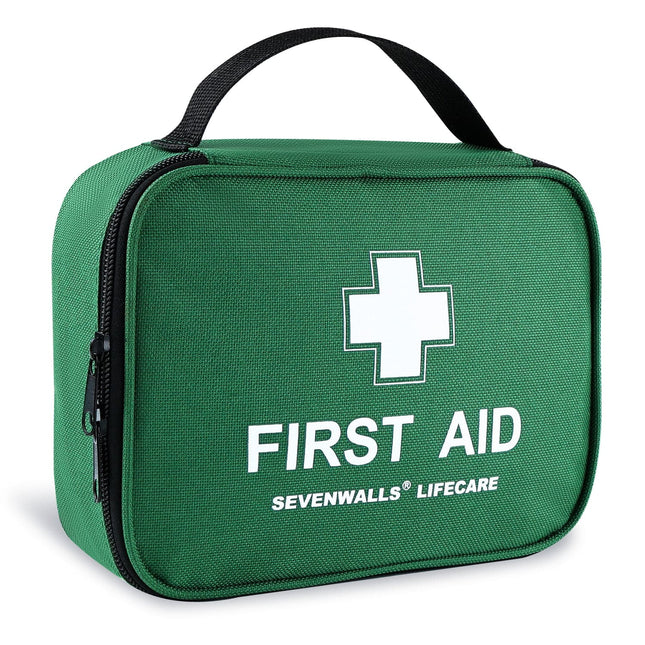
HSE guidance for top-handled chainsaw work states that, as a minimum, each person should carry a personal first aid kit.
The guidance identifies items including:
a large wound dressing;
barrier gloves;
plasters;
a whistle.
This personal kit is separate from any larger first aid provision available at the worksite.
The purpose is straightforward: if someone suffers a serious cut away from the main vehicle, welfare unit or first aid point, essential equipment must be immediately accessible rather than several minutes away.
Should forestry sites also have a larger first aid kit?
Yes, where the needs assessment identifies that additional provision is necessary.
A personal kit carried by each worker does not remove the need to consider wider site first aid arrangements.
Depending on the work, this may include:
a larger workplace first aid kit;
additional wound dressings;
equipment appropriate to foreseeable life-threatening bleeding;
eye wash where suitable;
burns supplies where relevant;
blankets or protection from cold conditions;
additional equipment identified through the first aid needs assessment.
Equipment should be readily accessible and protected from moisture, dirt, fuel, sawdust and other conditions that could damage it.
You can view our range of first aid kits when reviewing workplace or travelling provision.
Chainsaw injuries and severe bleeding
A chainsaw can cause deep wounds and catastrophic blood loss very quickly.
If severe bleeding occurs:
make sure the chainsaw and surrounding work are made safe;
call 999 immediately;
apply firm direct pressure to the wound using a suitable dressing where possible;
continue pressure and monitor the casualty;
follow the emergency call handler's instructions;
watch for signs of shock.
Where life-threatening bleeding is a foreseeable workplace risk, the first aid needs assessment should consider whether additional equipment and training are appropriate.
Do not pull out an object that is embedded deeply in a wound.
Removing it may cause additional tissue damage or increase bleeding.
Instead:
call emergency services;
apply pressure around the object rather than directly onto it;
support the object with padding if possible;
keep the casualty still and monitor them.
Shock after a serious chainsaw or forestry injury
Severe bleeding, crush injuries and major trauma can all lead to medical shock.
Possible signs include:
pale or clammy skin;
rapid breathing;
weakness or dizziness;
restlessness;
confusion;
reduced responsiveness.
Shock is a life-threatening emergency. Call 999, deal with any obvious life-threatening cause where possible, keep the casualty warm and continue monitoring them.
Tree surgeons and arborists may work from ropes and harnesses, mobile elevating work platforms or other specialist access systems.
A fall can result in:
head injury;
spinal injury;
fractures;
internal injury;
loss of consciousness.
If a casualty has fallen from height, do not focus only on the most obvious injury. Consider the possibility of multiple injuries and call 999 where significant trauma has occurred.
First aid is much more difficult if the injured person is suspended in a tree and cannot reach the ground.
HSE guidance states that a minimum of two people should be present during tree-climbing operations, with one person available on the ground who is competent and equipped to carry out an aerial rescue without delay.
This means emergency rescue should be planned before climbing begins.
The team should consider:
who will carry out the rescue;
whether that person is competent;
whether the necessary rescue equipment is available;
how the casualty will be lowered safely;
how emergency services will reach the site;
how first aid will begin once the casualty is accessible.
HSE case studies show that failure to plan an aerial rescue can seriously delay treatment after a fall or other injury.
Can you rely on the fire service for aerial rescue?
No. Calling the emergency services is essential after a serious incident, but the work team should not rely on the fire and rescue service as its only aerial rescue plan.
Tree-climbing operations should already have competent rescue capability available on site.
Emergency services may still provide specialist assistance, but waiting for them to organise the initial rescue could create a dangerous delay.
Forestry and lone working
Lone working requires careful assessment because serious injuries may prevent the worker from calling for help.
For higher-risk chainsaw or tree work, employers should consider whether the task is suitable to be carried out alone at all.
Where lone working is permitted, arrangements should consider:
how the worker will call for help;
scheduled check-in arrangements;
what happens if a check-in is missed;
mobile phone coverage;
radios or satellite communication where appropriate;
Do first aiders need specialist training for forestry work?
The level of first aid training should reflect the first aid needs assessment.
Because forestry and chainsaw work can involve severe trauma and remote locations, employers should consider whether ordinary low-risk workplace training provides enough preparation for the foreseeable emergencies.
The assessment may justify additional training relating to:
life-threatening bleeding;
major trauma;
crush injuries;
remote casualty care;
aerial rescue;
hypothermia;
emergency communication.
Training should be appropriate to the work actually being carried out.
Should every worker know where the first aid equipment is?
Yes. Workers should know the site's first aid and emergency arrangements before work starts.
This includes:
who the first aiders are;
who is responsible for emergency arrangements;
where the main first aid kit is kept;
what personal first aid equipment should be carried;
how to raise an alarm;
the site's exact location;
where emergency services will meet the team;
who is competent to perform aerial rescue.
How often should forestry first aid kits be checked?
There is no universal legal inspection interval for every kit.
However, forestry equipment can be exposed to harsh conditions, so regular checks are particularly important.
Check that:
personal kits are still being carried;
dressings remain sealed and undamaged;
supplies have not been contaminated by water, fuel or dirt;
used items have been replaced;
time-sensitive products remain within their usable dates;
the kit still reflects the current needs assessment.
What should happen after a serious forestry accident?
Once the immediate emergency has been dealt with, the incident should be reviewed.
This may involve:
recording the accident;
considering whether it is reportable under RIDDOR;
preserving relevant evidence where necessary;
reviewing the risk assessment;
reviewing rescue and communication arrangements;
replenishing first aid equipment;
identifying whether training, PPE or working methods need to change.
Forestry and chainsaw first aid planning checklist
Area
What to confirm before work begins
Risk assessment
Foreseeable serious injuries and medical emergencies have been identified.
Personal first aid kits
Workers carry appropriate personal first aid equipment where required.
Main first aid provision
Suitable additional equipment is accessible at the worksite.
Severe bleeding
Training and equipment reflect the foreseeable risk of major chainsaw injuries.
Communication
Phones, radios or other systems work reliably at the site.
Location
Workers can provide emergency services with an accurate location or grid reference.
Aerial rescue
A competent and equipped person is available where tree-climbing operations are taking place.
Emergency access
Ambulance and rescue teams can reach the site and any gates or barriers can be opened.
Lone working
Tasks have been assessed for suitability and suitable alarm or check-in arrangements are in place.
Weather
Cold, heat, wind and other environmental conditions have been considered.
Training
Workers and first aiders have training appropriate to the work and foreseeable injuries.
Official HSE guidance
The Health and Safety Executive provides dedicated guidance for forestry, arboriculture and chainsaw work, including training, PPE, lone working, first aid and aerial rescue.
Do chainsaw operators need to carry a personal first aid kit?
HSE guidance for top-handled chainsaw work states that, as a minimum, each person should carry a personal first aid kit incorporating a large wound dressing, barrier gloves, plasters and a whistle. Wider first aid provision may also be required according to the needs assessment.
What is the biggest first aid risk when using a chainsaw?
Chainsaws can cause severe lacerations and life-threatening bleeding. The first aid needs assessment should consider this foreseeable risk, together with appropriate training, equipment and emergency communication arrangements.
Does tree-climbing work need an aerial rescue plan?
Yes. HSE guidance says a minimum of two people should be present during tree-climbing operations and one person on the ground should be competent and equipped to carry out an aerial rescue without delay.
Can a tree surgeon work alone?
Lone working should be assessed according to the task and level of risk. Some high-risk activities may not be suitable for lone working, particularly where rapid rescue or assistance would be required after an accident.
What location information should forestry workers have?
Workers should be able to provide emergency services with an accurate location, such as a postcode, GPS position or grid reference, together with information about access roads, gates and a suitable rendezvous point.
Should forestry first aiders have additional training?
The training provided should reflect the first aid needs assessment. Where serious trauma, life-threatening bleeding, remote working or aerial rescue are foreseeable, additional or more specialised training may be appropriate.
1-2 days delivery
FirstAidKitsUK offers free delivery on all UK orders via Royal Mail 48 Tracked. We offer free next-day delivery on all orders over £30 via Royal Mail 24 Tracked.
Royal Mail 48 Tracked: Orders placed before 16:00 pm are dispatched the same day Mon-Fri, and 11:00 pm Sat. Orders after this threshold will be dispatched the next working day. Delivery takes 2 days, including Saturdays. This service is free for all orders.
Royal Mail 24 Tracked: Orders placed before 16:00 pm Mon-Fri, before 11pm Saturday are dispatched the same day. Orders after this threshold will be dispatched the next working day. Delivery will take place the next working day. This service is free for orders over £30. The charge for this service is £3.99 for orders under £30.
This may not be available during public holidays or weekends in between public holidays.
1-2 days delivery
FirstAidKitsUK offers free delivery on all UK orders via Royal Mail 48 Tracked. We offer free next-day delivery on all orders over £30 via Royal Mail 24 Tracked.
Royal Mail 48 Tracked: Orders placed before 16:00 pm are dispatched the same day Mon-Fri, and 11:00 pm Sat. Orders after this threshold will be dispatched the next working day. Delivery takes 2 days, including Saturdays. This service is free for all orders.
Royal Mail 24 Tracked: Orders placed before 16:00 pm Mon-Fri, before 11pm Saturday are dispatched the same day. Orders after this threshold will be dispatched the next working day. Delivery will take place the next working day. This service is free for orders over £30. The charge for this service is £3.99 for orders under £30.
This may not be available during public holidays or weekends in between public holidays.
1-2 days delivery
FirstAidKitsUK offers free delivery on all UK orders via Royal Mail 48 Tracked. We offer free next-day delivery on all orders over £30 via Royal Mail 24 Tracked.
Royal Mail 48 Tracked: Orders placed before 16:00 pm are dispatched the same day Mon-Fri, and 11:00 pm Sat. Orders after this threshold will be dispatched the next working day. Delivery takes 2 days, including Saturdays. This service is free for all orders.
Royal Mail 24 Tracked: Orders placed before 16:00 pm Mon-Fri, before 11pm Saturday are dispatched the same day. Orders after this threshold will be dispatched the next working day. Delivery will take place the next working day. This service is free for orders over £30. The charge for this service is £3.99 for orders under £30.
This may not be available during public holidays or weekends in between public holidays.
1-2 days delivery
FirstAidKitsUK offers free delivery on all UK orders via Royal Mail 48 Tracked. We offer free next-day delivery on all orders over £30 via Royal Mail 24 Tracked.
Royal Mail 48 Tracked: Orders placed before 16:00 pm are dispatched the same day Mon-Fri, and 11:00 pm Sat. Orders after this threshold will be dispatched the next working day. Delivery takes 2 days, including Saturdays. This service is free for all orders.
Royal Mail 24 Tracked: Orders placed before 16:00 pm Mon-Fri, before 11pm Saturday are dispatched the same day. Orders after this threshold will be dispatched the next working day. Delivery will take place the next working day. This service is free for orders over £30. The charge for this service is £3.99 for orders under £30.
This may not be available during public holidays or weekends in between public holidays.
1-2 days delivery
FirstAidKitsUK offers free delivery on all UK orders via Royal Mail 48 Tracked. We offer free next-day delivery on all orders over £30 via Royal Mail 24 Tracked.
Royal Mail 48 Tracked: Orders placed before 16:00 pm are dispatched the same day Mon-Fri, and 11:00 pm Sat. Orders after this threshold will be dispatched the next working day. Delivery takes 2 days, including Saturdays. This service is free for all orders.
Royal Mail 24 Tracked: Orders placed before 16:00 pm Mon-Fri, before 11pm Saturday are dispatched the same day. Orders after this threshold will be dispatched the next working day. Delivery will take place the next working day. This service is free for orders over £30. The charge for this service is £3.99 for orders under £30.
This may not be available during public holidays or weekends in between public holidays.
1-2 days delivery
FirstAidKitsUK offers free delivery on all UK orders via Royal Mail 48 Tracked. We offer free next-day delivery on all orders over £30 via Royal Mail 24 Tracked.
Royal Mail 48 Tracked: Orders placed before 16:00 pm are dispatched the same day Mon-Fri, and 11:00 pm Sat. Orders after this threshold will be dispatched the next working day. Delivery takes 2 days, including Saturdays. This service is free for all orders.
Royal Mail 24 Tracked: Orders placed before 16:00 pm Mon-Fri, before 11pm Saturday are dispatched the same day. Orders after this threshold will be dispatched the next working day. Delivery will take place the next working day. This service is free for orders over £30. The charge for this service is £3.99 for orders under £30.
This may not be available during public holidays or weekends in between public holidays.
1-2 days delivery
FirstAidKitsUK offers free delivery on all UK orders via Royal Mail 48 Tracked. We offer free next-day delivery on all orders over £30 via Royal Mail 24 Tracked.
Royal Mail 48 Tracked: Orders placed before 16:00 pm are dispatched the same day Mon-Fri, and 11:00 pm Sat. Orders after this threshold will be dispatched the next working day. Delivery takes 2 days, including Saturdays. This service is free for all orders.
Royal Mail 24 Tracked: Orders placed before 16:00 pm Mon-Fri, before 11pm Saturday are dispatched the same day. Orders after this threshold will be dispatched the next working day. Delivery will take place the next working day. This service is free for orders over £30. The charge for this service is £3.99 for orders under £30.
This may not be available during public holidays or weekends in between public holidays.